We form fine ceramic powders supplied by our customers. We have experience with materials such as alumina (Al₂O₃) and aluminum nitride (AlN). Since formability differs by material, we determine the optimal forming conditions through prototyping and evaluation.
From Traditional Building Materials to Next-Generation Manufacturing
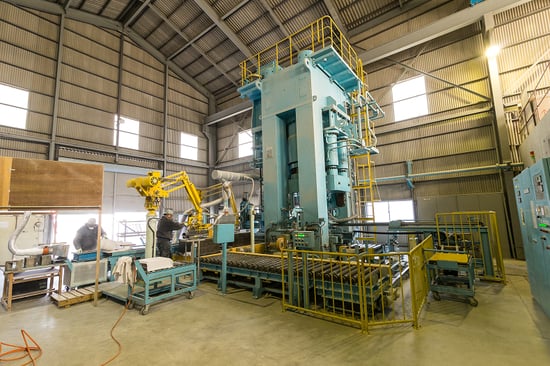
We developed a 4,000-ton ultra-high-pressure press in-house to produce Limix, our non-fired shikkui ceramics, and built up our powder forming expertise through years of operating it. By applying these technical assets to fine ceramics, we have established a new forming technology.
Our 4,000-ton press is one of the few of its class used for fine ceramics forming in Japan. It fills powder with high precision and presses it uniformly, making it possible to form large, thin fine ceramic plates that are difficult to achieve with conventional press forming.
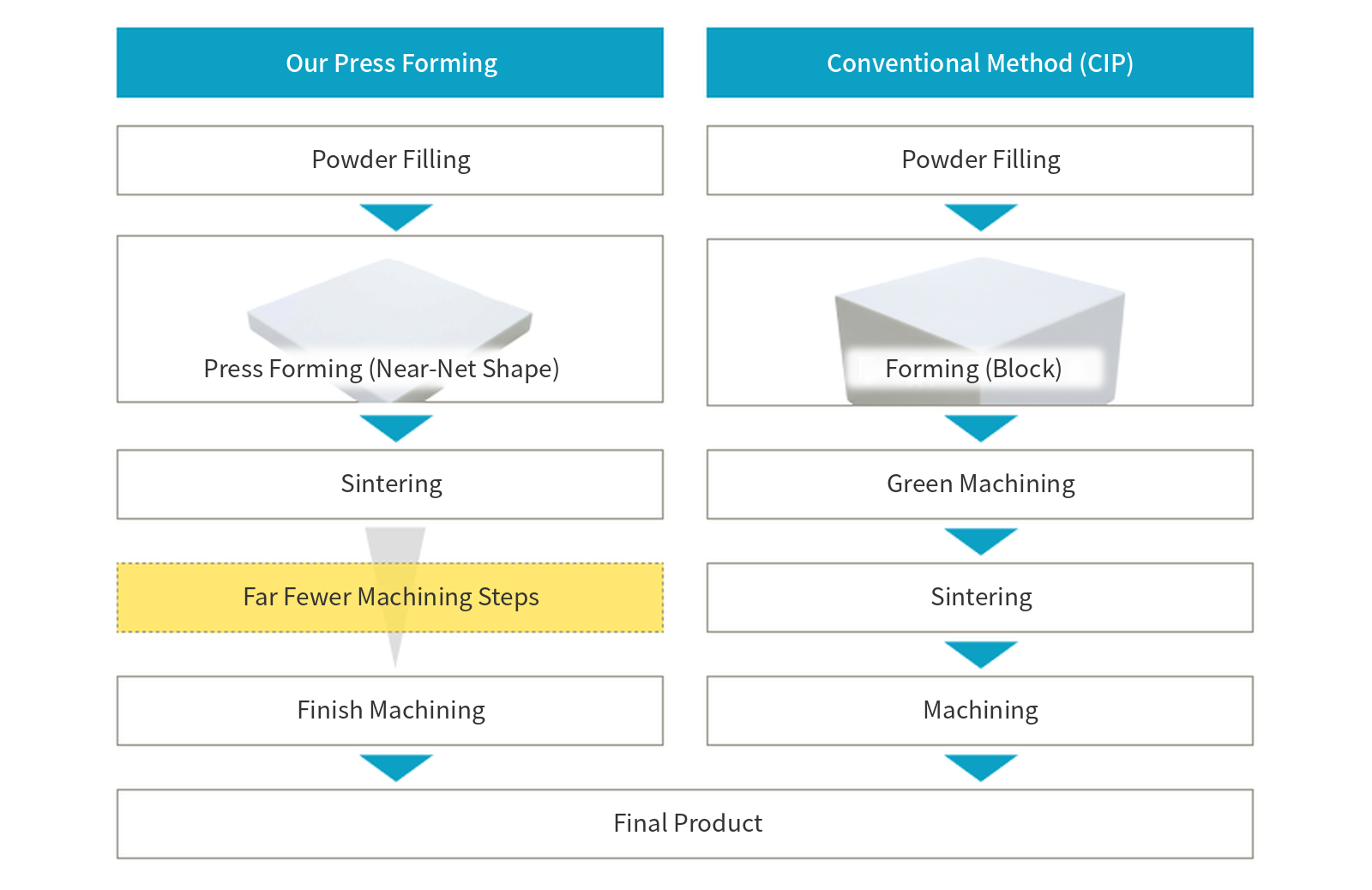
Because the plates are formed at high density in their final plate shape, green machining, which is required with conventional CIP (cold isostatic pressing), is no longer necessary, and machining after sintering is kept to a minimum. This reduces machining time and material loss, helping to lower total costs and shorten manufacturing lead times.
Creating new value from inherited expertise.
Building on a century of manufacturing know-how, Tagawa Shikkui Labs is expanding into new possibilities in fine ceramics.
Challenges We Can Solve
Large-Format Forming
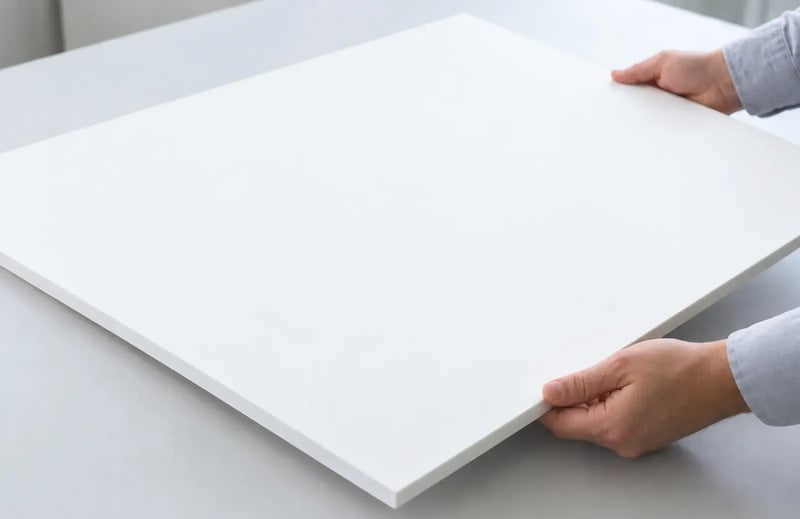
We can form large fine ceramic plates, 400 mm or 600 mm square, which are difficult to produce on typical presses. Our in-house 4,000-ton ultra-high-pressure press ensures high-precision forming. We have a track record of forming plates 7 mm or thicker at 400 mm square, and 10 mm or thicker at 600 mm square.
Prototypes and Small Lots Welcome
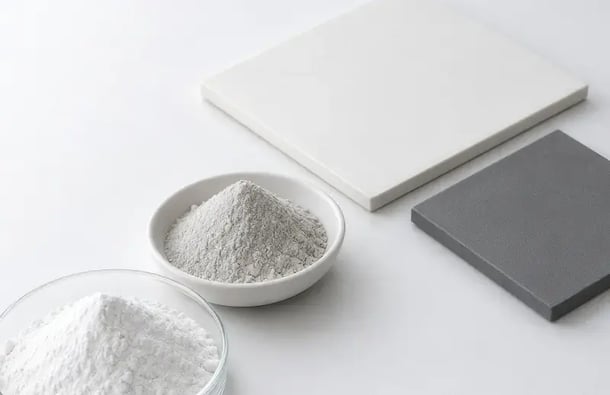
We accept requests starting from prototypes and small lots, and form using customer-supplied raw materials. Materials we have formed include alumina (Al₂O₃), aluminum nitride (AlN), silicon nitride (Si₃N₄), and Macerite.
Reducing Total Cost
Forming in plate shape reduces raw material use, eliminates process steps, and shortens lead times. This helps lower total costs and offers a new, more efficient way to manufacture large, thin fine ceramic plates. For example, a 400 mm square alumina (Al₂O₃) plate (335 mm square, t = 7 mm after sintering) requires about 3 kg of raw material and takes about 30 minutes to form per plate. Unlike conventional methods that machine parts out of a block, our plates are formed close to their final shape, so far less material needs to be removed. Even for prototypes, we can respond with short turnaround times.